

Commentary
Nathan J. Brown
{
  "authors": [
    "Nathan J. Brown"
  ],
  "type": "commentary",
  "blog": "Diwan",
  "centerAffiliationAll": "",
  "centers": [
    "Carnegie Endowment for International Peace",
    "Malcolm H. Kerr Carnegie Middle East Center"
  ],
  "englishNewsletterAll": "",
  "nonEnglishNewsletterAll": "",
  "primaryCenter": "Malcolm H. Kerr Carnegie Middle East Center",
  "programAffiliation": "",
  "regions": [
    "Palestine",
    "Israel",
    "United States"
  ]
}
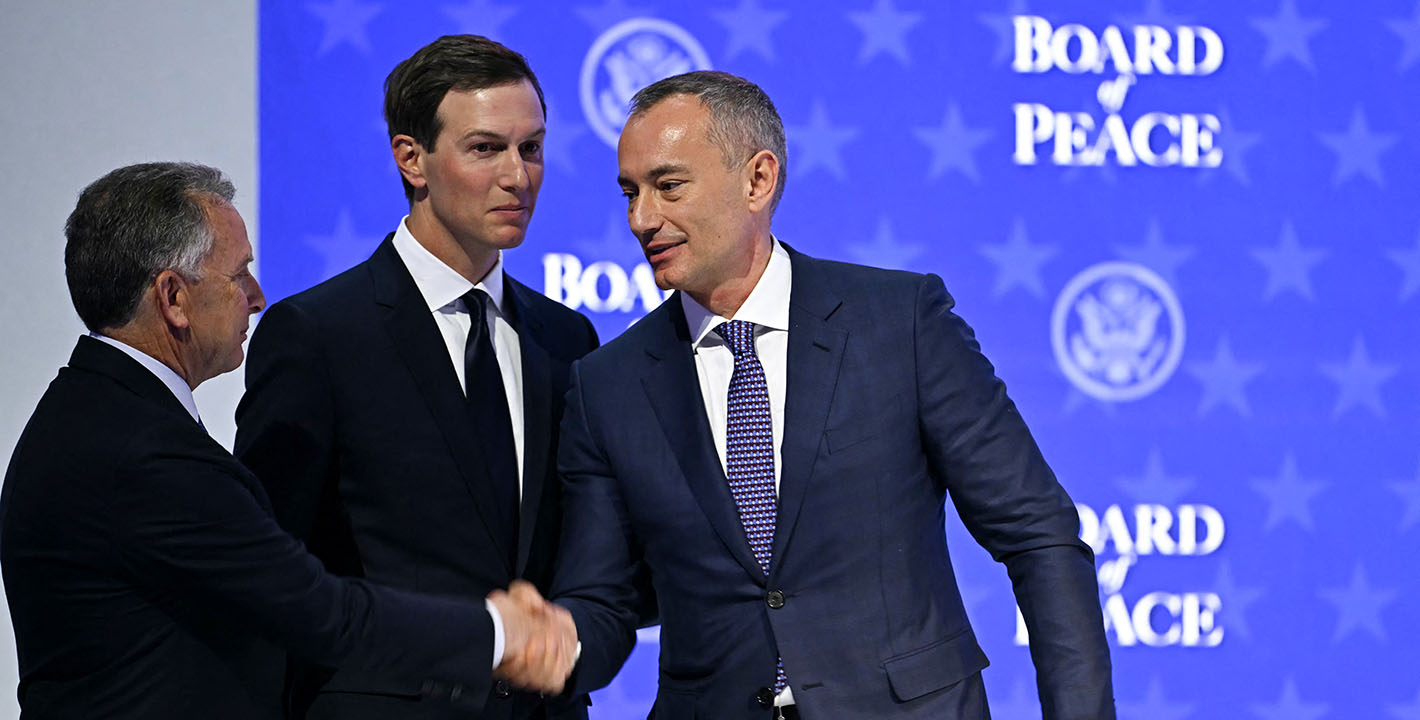
Source: Getty
Policy discussion is ignoring that the Palestinian national project is hollowed out and apartheid is a present danger.
In policy discussions about Israel and Palestine, concepts often outlive reality. They continue to organize debate long after they have stopped describing the world they claim to explain.
I am making an abstract claim, but also a personal one. Those writings of mine that have aged best were hardest to place when I wrote them. When I say they aged best, I mean that much later they became close to conventional wisdom. But by the time they became easier to say, they had also become less useful. Analysis that arrives early enough to matter is often easiest to dismiss; once it becomes obvious, it is often too late to alter the course it described.
Like many analysts, I have often been shortsighted. Strikingly though, it is often the pieces that sought to improve prevailing frameworks rather than question them that have aged the worst. The cruel pattern is that policy frameworks often survive long after the realities they were created to describe have changed. By the time analysts adjust their vocabulary, the developments in question have often become entrenched.
That pattern has recurred across a range of moments: from “The Peace Process Has No Clothes” and “Sunset for the Two-State Solution?” on the emerging “one state reality” to “Are Palestinians Building a State?” on “Fayyadism” and “The Old Israeli-Palestinian Conflict Is Dead—Long Live the Emerging Israeli-Palestinian Conflict” and “Israel Is Approaching a 1948 Moment” on political realities rather than a long-dead “peace process.” After October 7, 2023, “There Might Be No Day After in Gaza” and “The Trump Plan Will More Likely Stall Than Crash” tackled new realities in a way that questioned prevailing ideas.
What I now think might seem the most prescient piece I wrote was the one I drafted with a very insightful colleague who ultimately had to withhold their name from the publication due to institutional constraints. The article colored too much outside the lines. That, too, is part of the pattern. Arguments can be right not because they fit the discussion of the moment, but because they refuse its boundaries. But then such arguments are often unheard.
Nor is this simply a personal observation. Some of the most insightful work on Palestinian politics over the past three decades has encountered the same endemic deafness. Khalil Shikaki’s 1998 title, “Peace Now or Hamas Later,” captured how clearly some warnings were already visible. Yezid Sayigh and Shikaki’s 1999 report, “Strengthening Palestinian Public Institutions,” addressed the pathologies of the emerging Palestinian Authority, with innumerable constructive suggestions, but the reform agenda it helped inspire was soon folded back into a process whose political foundations were already eroding. Palestinian “reform” instead became a bludgeon to beat its ostensible beneficiary. Tareq Baconi’s book Hamas Contained later challenged the comforting idea that Hamas’s governance of Gaza would lead to the movement’s indefinite domestication. The International Crisis Group repeatedly saw the contradiction as well. It even reached for the same metaphor I had employed—that the peace process had no clothes—likely simply because it suggested itself to anybody listening to diplospeak while watching reality on the ground.
These pieces were not all saying the same thing. But they shared a habit: they asked whether the framework organizing discussion still described reality. But such questions received no answer in prevailing policy discourse. The peace process continued long after there was little process leading toward peace. The two-state solution remained the organizing horizon while the conditions for two states steadily eroded. Palestinian state-building persisted as a policy project even as sovereignty receded. The “day after” became a subject of urgent planning even when there was little evidence that the relevant actors intended to create one. And the Trump 20-point plan for Palestinian-Israeli peace, presented in September 2025, was debated as if it would succeed or fail, when its more likely effect was to stall realities on the ground while reshaping them.
That is often how negative trends were absorbed. The “peace process” was understood as being in trouble years after it had collapsed; “creeping annexation” was understood as threatening an outcome long after that outcome had been concretized. If such developments were acknowledged at all, it was as warnings of what might come rather than what had already occurred. They could then be folded back into the existing policy vocabulary—more peace process, more reform, more institution-building, more urgency—rather than a different understanding of what was happening.
The pattern repeated itself. Declining confidence in the Oslo Accords became an argument for doubling down on a “peace process” (or those elements specific actors preferred). The weakening of Palestinian statehood became an argument for more state-building. The exhaustion of the peace process became an argument for reviving the peace process. The absence of a political horizon after October 7, 2023, became an argument for planning the day after by assuming the actors’ stated intentions away. The likely paralysis of Trump’s Gaza plan became an argument for pushing harder on implementation. So, most recently, Nickolay Mladenov, the high representative for Board of Peace in Gaza, oxymoronically repeated this pattern by warning of a “deteriorating status quo.”
In each cases, negative trends were treated as warnings that, once acknowledged, could safely be ignored. They showed that the prevailing framework would be endangered unless it was entrenched more deeply—but never that the prevailing framework might actually be wrong.
What, then, is policy discussion missing now while it focuses on the wall—the next steps in Trump’s 20-point plan, negotiations between Lebanon and Israel—rather than the horizon of a region governed by forever wars? At least two things—though neither is obscure to those who inhabit the one-state reality (of Israeli domination of the entire territory between the Jordan River and the Mediterranean and the foreclosure of prospects of Palestinian statehood). For many who live inside it, work within it, or encounter it in daily political and legal practice, these are not conclusions to be argued toward but premises from which discussion begins. Enter policy discussion, however, and they become almost unsayable. What are these two things?
First, Palestinian politics is not simply awaiting reform, better leadership, or institutional revival. Its national project has been hollowed out. Yezid Sayigh has written of a “third death” of Palestinian politics. I have similarly described the problem of “Palestinians without Palestine”: the people remain and national identity remains strong but structures have atrophied. Both formulations point to the same reality that the issue is not only weak institutions or poor leadership but the erosion of the political project those institutions were meant to serve. Yet policy discussion circles back to familiar fixes—Marwan Barghouti, Salam Fayyad, technocratic reform, institutional renewal—as if the main challenge was finding the right faded leader to march Palestinians toward a horizon they can no longer see.
Second, apartheid is not a future danger. It is the governing reality for Palestinians. Policy discussion still treats Israel’s rejection of two states as a position to be reversed rather than a reality already being entrenched and stridently endorsed by a wide domestic consensus. But Israel is not merely postponing Palestinian sovereignty; it is organizing territory, law, movement, security, and political authority in ways that deny Palestinians collective national rights while preserving Israeli control. That is happening today, not in a future that might be avoided.
My point is not that these views are uncontestable, though I do hold them. My point is that they are not contested in policy discussions. They are simply ignored. There is a temptation, to read these patterns as retrospective vindication. I do not always resist that conclusion, but even when I succumb, I cannot lose sight of how such a response is rarely useful. If the point of analysis is to illuminate reality early enough to matter, then saying things too early—or in a language the relevant discussion cannot yet absorb—is not much of a victory.
This does not mean that those working within existing frameworks are cynical or foolish. Many are perceptive, knowledgeable, disciplined, and often doing useful work. Nor does it mean that some of us are somehow more discerning. We are looking at different things. Those enmeshed in policy discussions see the wall immediately in front of them and try to keep people from crashing into it. That can be important. But some forms of analysis require looking past the wall toward the horizon. And today the most important development is that the horizon has already moved while diplomats are busy repainting the wall.
That is not simply a personal frustration. It points to a broader problem in policy analysis. The most useful arguments are often understood to be those that help decisionmakers navigate an existing map. Less welcome are arguments suggesting that the map no longer corresponds to the terrain.
By the time a framework visibly collapses, everybody sees its weaknesses. The more difficult moment comes earlier, when the comforting vocabulary remains authoritative, the multilateral meetings continue, diplomatic processes seem robust, and the assumptions continue to organize discussion even as reality has begun to move elsewhere. Those are sometimes the moments analysis that colors outside the lines is most necessary. But those are also the moments when such analysis is least welcome.

Nonresident Senior Fellow, Middle East Program
Nathan J. Brown, a professor of political science and international affairs at George Washington University, is a distinguished scholar and author of nine books on Arab politics and governance, as well as editor of five books.
Recent Work
Nathan J. Brown
Nathan J. Brown
Carnegie does not take institutional positions on public policy issues; the views represented herein are those of the author(s) and do not necessarily reflect the views of Carnegie, its staff, or its trustees.
As negotiations with Iran and Lebanon continue, chaos is at the heart of the Netanyahu government’s calculations.

Michael Young
Adversaries are to be degraded so deeply, that reconstitution becomes difficult or impossible.
Nathan J. Brown
Israel is encroaching on the country’s territory, while the Lebanese look askance at one another.

Issam Kayssi
The party’s domestic and regional roles have changed, so Lebanon should devise a disarmament strategy that encompasses this.
Michael Young
In an interview, Marc Lynch discusses his new book decrying the post-1990 U.S.-dominated order in the Middle East.
Michael Young